PREVIOUS
Novatel and Caltta Co-host Seminar to Strengthen Türkiye’s Mission-Critical Communications Ecosystem



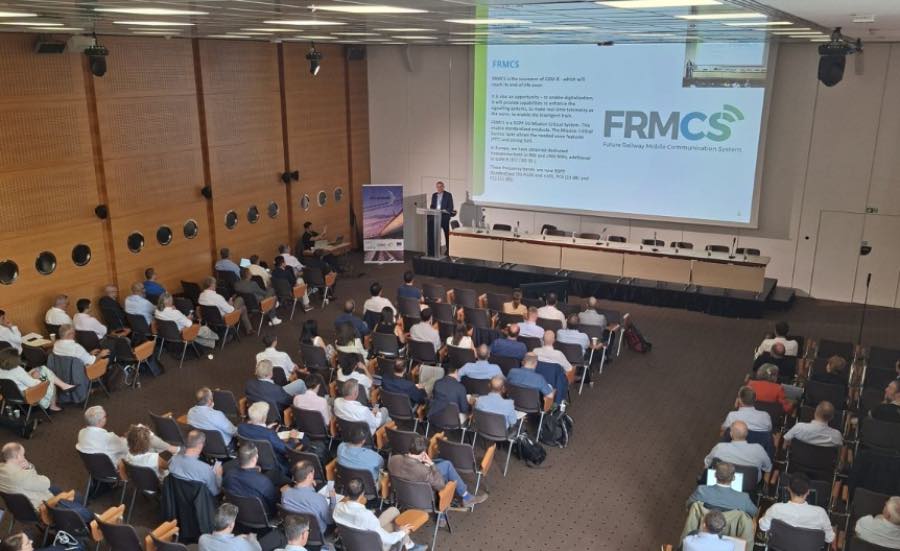
Europe's Future Railway Mobile Communication System (FRMCS) has entered a new phase of development as the FP2-MORANE-2 project officially transitions from system preparation and design to large-scale testing and validation, marking a significant milestone in the modernization of mission-critical railway communications across Europe.
The announcement was made during the FP2-MORANE-2 Mid-Term Conference, where project partners showcased the latest progress toward deploying the Future Railway Mobile Communication System (FRMCS)—the next-generation communications platform designed to replace the legacy GSM-R network and support Europe's digital railway transformation.
The conference highlighted the successful completion of extensive planning, architecture design and integration preparation activities, paving the way for comprehensive laboratory testing across dedicated integration facilities. The next phase will focus on validating FRMCS technologies under realistic operational conditions before wider field deployments.
Over recent months, railway operators, infrastructure managers, telecommunications providers, technology suppliers and system experts from across Europe have worked together to build the technical foundation for FRMCS. This collaborative approach is intended to ensure interoperability between networks, vendors and railway systems while accelerating the transition toward a harmonized European railway communications infrastructure.
The FP2-MORANE-2 initiative serves as one of the flagship projects supporting FRMCS implementation by demonstrating and validating next-generation railway communication solutions in operational environments. The project's objective is to reduce deployment risks while ensuring seamless migration from GSM-R to a future-ready broadband communications platform.
Industry stakeholders emphasized that cooperation across the European railway ecosystem remains one of the project's strongest assets. By bringing together infrastructure managers, railway undertakings, equipment manufacturers and telecommunications specialists, the initiative is establishing common technical standards necessary for interoperable and scalable deployment throughout Europe.
The project is supported by the Europe's Rail Joint Undertaking and delivered through close collaboration with organizations including UIC and UNIFE – The European Rail Supply Industry Association, alongside their member organizations and technology partners.
The coordinated effort reflects the European railway industry's shared commitment to developing a unified communications ecosystem capable of supporting increasingly digital, connected and automated railway operations.
Beyond serving as the successor to GSM-R, FRMCS is expected to become the communications backbone for next-generation rail operations.
The broadband-based platform will support higher operational efficiency, enhanced safety, greater network capacity and improved service reliability while enabling advanced digital railway applications, including automation, real-time operational management and future mission-critical services.
With testing activities now entering a new stage, the FP2-MORANE-2 project represents another major step toward the eventual deployment of FRMCS across Europe's railway network. While further validation and operational trials remain ahead, the progress presented during the Mid-Term Conference demonstrates growing industry confidence in delivering a resilient, interoperable and future-proof communications system for European rail transport.
The conference concluded with recognition of the contributions made by participating partners, suppliers, railway operators and technical experts, whose continued collaboration remains central to advancing Europe's vision for next-generation railway communications.