PREVIOUS
NO MORE



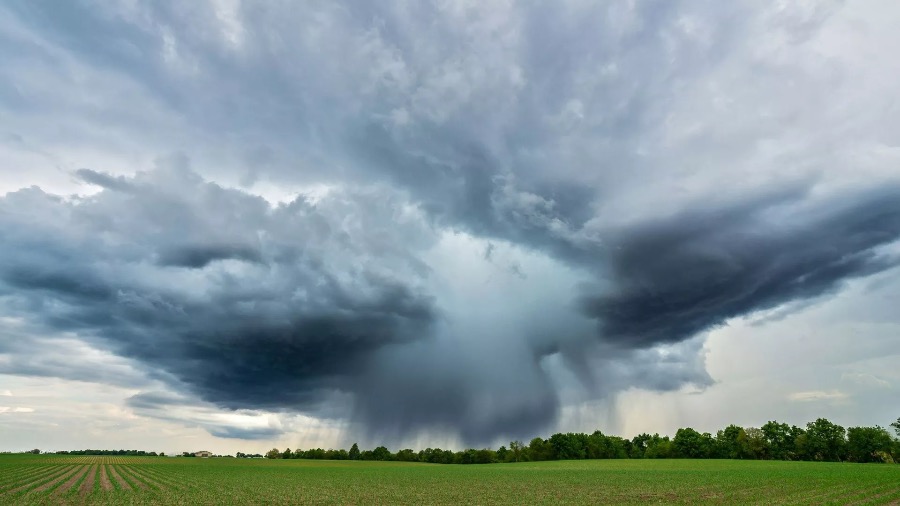
In my more than 20 years in the wireless industry and more than a decade dedicated to public safety communications, I have watched the definition of a “natural disaster” shift dramatically.
For the more than 45,000 public safety agencies that rely on Verizon Frontline, the scale and complexity of these events are reaching unprecedented levels. To meet this escalating challenge, we can no longer afford to simply react to disasters after they strike. We must anticipate them. This is where artificial intelligence (AI), supported by mission-critical connectivity, is redefining how we prepare for, and respond to, catastrophic events.
The true power of AI in emergency management lies in its ability to process massive, disparate datasets faster than any human could, increasingly moving our operational posture from reactive to predictive.
Wildfires: AI prediction systems now actively analyze real-time meteorological data, terrain topography, soil moisture and dry vegetation levels. By modeling the precise path a wildfire is likely to take before a spark becomes an inferno, incident commanders can issue highly-targeted, preemptive evacuation orders and stage fire lines where they are needed most.
Hurricanes: In the chaotic hours immediately following a hurricane, situational awareness is critical. At Verizon, we are deploying cutting-edge Digital Twin technology this hurricane season. By using AI to compare high-resolution, 3-D “before” and “after” models of our cell sites captured by drones, advanced software instantly pinpoints damaged antennas or cables. We no longer have to wait for floodwaters to recede to know what is damaged. We can instantly route the right equipment to the site, accelerating restoration when connectivity is needed most.
Flash floods: AI models continuously ingest hyper-local precipitation forecasts and real-time gauge data to predict flood crests and inundation zones down to the neighborhood level, often hours in advance. This gives communities the critical lead time necessary to close vulnerable bridges, reroute traffic and move families out of harm’s way before the water rises.
Through our Verizon Frontline Innovation Program and Community Disaster Resilience Initiative, Verizon is investing in the next generation of these technologies by supporting start-ups and entrepreneurs developing tools and models to aid with all types of disasters.
This shift toward predictive technology is not just an industry aspiration; it is what our communities and public servants now demand. According to a recent Morning Consult survey commissioned by Verizon, the integration of advanced tools into emergency management is viewed as a necessity.
The survey revealed that public servants and consumers alike support the deployment of modern emergency response technologies, explicitly recognizing that escalating threats require advanced tools like AI prediction systems and smart wearables for first responders. The data underscores a public sector that is eager to innovate:
95% of public sector respondents agree that technology is a tool that helps their organization serve the community better.
91% of public sector employees report having already used AI tools, demonstrating the highest level of engagement across surveyed demographics.
84% of public servants believe AI can predict and mitigate the impacts of natural disasters before they strike.
84%+ of public officials support AI-powered predictive mapping, smart wearables and emergency call triage.
While the appetite for AI is immense, public safety professionals agree that we should not fully rely on it for emergency or disaster response.
This finding perfectly encapsulates Verizon Frontline’s philosophy. AI is a powerful force multiplier, but it is not a replacement for human judgment. It cannot match the lived experience, courage, or intuition of a law enforcement officer, firefighter or paramedic. AI’s role is to cut through the noise, process the data, and deliver clear, actionable insights so that first responders on the ground can make life-or-death decisions with confidence.
There is one immutable truth about this predictive future: AI is only as good as the data feeding it and that data relies on the network.
Predictive models, drone video streams and edge-computing analytics generate immense amounts of data that must be transmitted in real-time, sometimes under the most adverse conditions imaginable.
This is why connectivity must be considered the bedrock of modern disaster resilience. Whether we are deploying a temporary asset into a debris-strewn flood zone to establish satellite connectivity, or utilizing 5G to power near real-time aerial drone mapping, our ultimate goal is to make the network invisible. First responders should never have to think about their connection; they should simply know it is there.
As the threats we face continue to evolve, so too must our tools. By embracing AI and investing in the resilient networks that power it, we are doing more than upgrading our infrastructure. We are buying time, building resilience, and equipping the frontline with the intelligence they need to save lives.